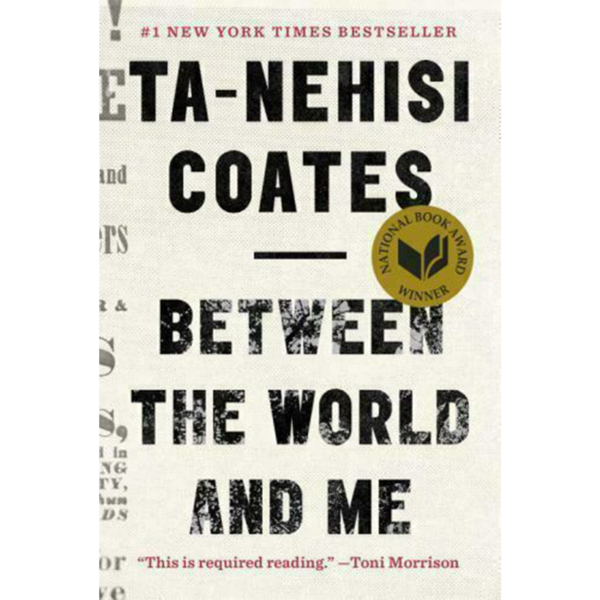
Coates, T. (2015). Between the World and Me. United States: Random House Publishing Group.
During the troubling summer of 2020, I spent about a week in Baltimore, MD, the hometown of author Ta-Nehisi Coates. I had not read “Between the World and Me” yet, though it had been on my shelf for a few years. While in Baltimore I took note of the Baltimore Police Department helicopter that seemed to pass by overhead more than once during my week stay. While walking through a popular area near the inner harbor to get food, I couldn’t help but to take note of the all black Baltimore PD mobile command station, inconveniently parked right in the middle of the thoroughfare.
I picked up Coates’ “Between the World and Me” for the same reason I picked up Baldwin’s “The Fire Next Time” that summer. I wanted to hear what other Black voices had to say about the experience of being Black in the face of racism and oppression in this country.
Coates’ work is a letter to his 15-year-old son, who like him will grow to be a Black man in America. Coates addresses the murders of Eric Garner, Renisha McBride, Tamir Rice and numerous other Black people cut down by state violence. Like Monique W. Morris, he also speaks to the school to prison pipeline that targets Black children with precision.
When our elders presented school to us, they did not present it as a place of high learning but as a means of escape from death and penal warehousing.
Ta-Nehisi Coates, Between the World and Me
Coates talks about what it was like growing up in Baltimore just out of reach of the promise of Washington D.C. where he had to find his place somewhere between the violent streets and the violent public school system. This reminded me of my time working in West Charlotte High School which sits within an 8 mile radius outside of Uptown Charlotte. Despite being so near to a city center that is home to not one but two professional sports arenas, museums and galleries, concert venues, upscale restaurants, etc – my students lived in an area with one of the highest crime and poverty rates. A few years before I started working there, the graduation rate was an abysmal 58%. Coates notes that 60% of Black men who drop out of school will go to jail. I’m thinking about too many of my students who meet that statistic. Too many of my students who had to choose between the violence in the street or the violence in the classrooms.
 Krista Cherrelle